

Starting kids on a path of healthy eating helps to guarantee their habits stick as they enter adulthood. It’s one way that we, as parents, can give our children a great start in life. Encouraging them to get involved with food, cooking, and flavours teaches them good habits, gives them knowledge about nutrition, but also gives them skills that they can take into adulthood. But how do you get kids who might be a bit fussy or uninterested more involved with what they eat? It sounds like an impossible task, doesn’t it? Well, fear not. Here are a few great ways to get your kids interested and excited about food – soon they’ll be begging to get back in the kitchen to rustle up some more tasty treats.
Get their hands dirty
It can be tempting to keep kids on the sidelines while you’re trying to cook, partly for their safety, but mostly for efficiency’s sake. When you just want to get the meal on the table, tiny hands getting in the way can seriously slow down the process. But occasionally taking some time to encourage them to join in and get their hands dirty can really help them to interact with the food and the cooking process. Encourage them to touch everything that isn’t hot (and remember to wash their hands thoroughly before and after), and ask questions. Even stupid questions are helping them to build a picture of nutrition and cookery. And if you don’t know any of the answers, be sure to go away and look them up together – research is a valuable life skill to learn after all.
When kids touch and interact with anything, they’re building a picture. Encouraging them to do this with food is helping them to understand the importance of what they eat. While you’re not trying to create budding Michelin star chefs, being able to cook and understand flavours, textures, and types of food is certainly a valuable life skill.
Let them experiment
The beauty of childhood is their desire to explore, try new things, and make a bit of a mess in the process. Of course, you don’t necessarily want them experimenting with a £30 fillet of beef, or the family meal, but encouraging them to play with colours and flavours from a young age can really help them to find the whole process interesting and exciting. So next time you’re baking cupcakes together, don’t give them the usual icing and topping options – throw some curveballs and fun experiments in there too. Fair enough, Marmite might be a push. But try Nutella, peanut butter, and fruits of various descriptions, and see how they turn out. Next time you’re making a large meal, ask them to choose how to season it (you can still decide whether to go ahead with their options).
Take them shopping with you
Next time you do a big supermarket shop, try asking your child to help you to write yours shopping list. Not only do you not have to take their decisions, but they also get the opportunity to play grown-up. Don’t just ask them which sweets and crisps they’d like – encourage them to choose vegetables and fruits, meat, and other important elements of meal planning. And then take them with you, and give them a gentle nudge to choose the right products from the shelves. This helps to start to celent meal planning ideas, but it’s also a great way to teach them to recognise different ingredients. It’s also age appropriate – younger children can differentiate carrots from broccoli, whereas older kids might enjoy finding the right herbs or spices.
Choose kid-size tools
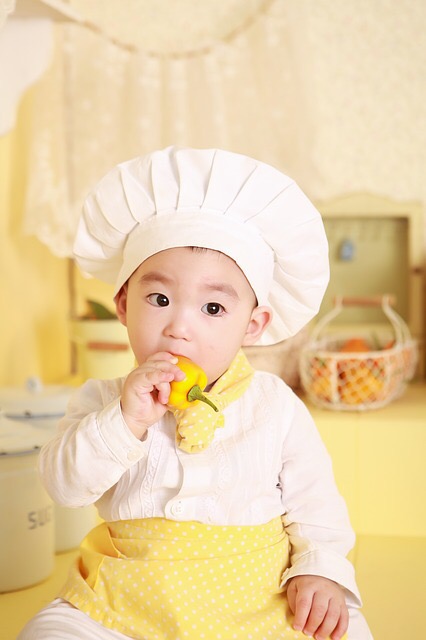
One way to make cooking very exciting for children is to give them their own tool set. Large knives are not only very dangerous for children, but also pretty unwieldy, just like other large pieces of equipment, such as wooden spoons and whisks. They’re almost certain to get excited when they’re allowed their very own kitchen tools. Child safe knives are a good start, along with smaller mixing bowls and pans. The clincher? Their very own apron. Whether it’s got their favourite character on, or it’s in their favourite colour, they’re always going to get excited to cook when they can put their own apron on.
Give them access all areas
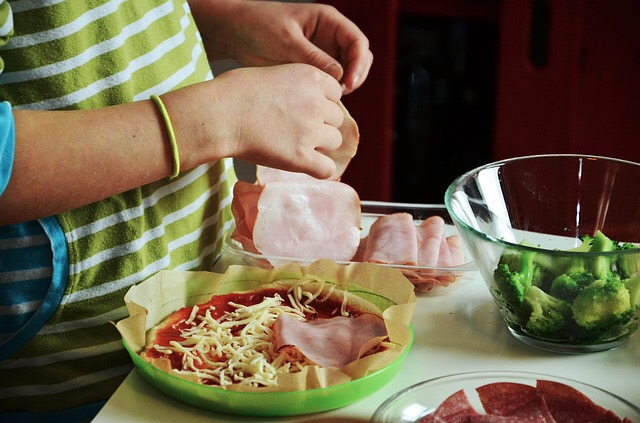
It can be tempting to mollycoddle kids and keep them away from the dirty elements of cooking, but that could be having a negative impact on how they perceive it growing up. Sometimes, it’s better to put them in their old clothes, get a few sheets of newspaper down, and let them go wild. Get them stirring batter, icing cakes, or get them stood on a stool, in the sink, washing muddy vegetables. In these cases, hard-wearing ceramic kitchen sinks are essential – kids have a habit of dropping things, so you need to make sure your equipment and sinks are built to last. You can even get them stirring food on the stovetop, with close enough supervision, and assuming they’re old enough not to fall in. As with any dangerous activities, this should all be done with close supervision, but there’s no reason any of it should be dangerous as long as the correct precautions are taken. Allowing them to witness and get involved with all areas of the cooking processes, from sourcing and prepping the food, to cooking and then cleaning up afterwards, enables them to understand the entire process, which is a skill they’ll take with them through life.
Make it fun
Cooking shouldn’t just be about getting food from supermarket to belly; it’s a process that should be enjoyed, and even savoured. Wherever it’s safe and sensible to do so, bring laughter and games into the kitchen with you. The aim is to teach them that cooking is a fun and entertaining way to spend time, and not just a chore that has to be done to survive. As the children get a bit older, competitions can be brought in. Who can decorate their batch of cookies the best, or who can make the best apple pie? The point here is to encourage them to engage with the food, but also enjoy the decision making processes. The outcome is almost by the by; it’s the processes and the family entertainment that counts.
Go from source to plate
One amazing way to encourage younger children to interact and really understand their food is to get them involved with the earlier stages in the process. An allotment or small vegetable patch is the perfect way to do this. It doesn’t have to be on a huge scale, just a few salad leaves, tomatoes, and maybe some carrots is all it takes. But try to get them to do every part of the process, from planting, to watering and monitoring, to harvesting, washing, cutting, and cooking. Understanding what each element means to the food that ends up on their plate is a great way to get them involved, but it’s also almost a guaranteed way to encourage the fussier eaters to at least try a few vegetables – after all, it’s all their hard work that has gone into their creation.
Teaching kids to cook isn’t just about getting them to follow recipes or help you out, it’s about encouraging them to start making their own decisions, experimenting, and engaging with the various processes. It should be fun, educational, but most of all, it should be great bonding time for the two of you. And you can sleep easy at night knowing they’re learning skills that will be invaluable in their adult lives.
